https://schema.org/EventScheduled

Assistant Dentaire : Implantologie Digitale


March 11, 2027
08:00 AM - 05:00 PM

12 Quai du Général Sarrail 69006 Lyon France


Organized by

See all events

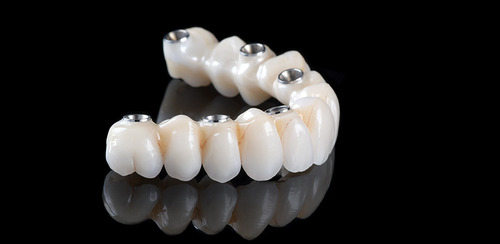
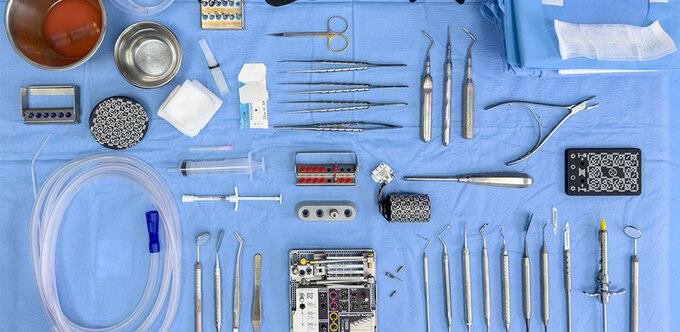
Connaître le protocole d’obtention des données patients (clone digital et DTX Clinic) Connaître le protocole X-Clip (X-Guide) avant scanner Savoir installer un bloc opératoire pour une chirurgie naviguée (X-Guide) Connaître les protocoles X-Clip & X-Mark en chirurgie Connaître le principe des imprimantes 3D (Sprintray) Appliquer un protocole simple de maquillage de prothèse provisoire


Detailed program

Accueil Café

Dr. Séverine DE OLIVEIRA

Cours : Flux Digital aujourd’hui / Clone Digital : Concept et protocoles de mise en oeuvre

Dr. Séverine DE OLIVEIRA

Pause

Démonstrations et TP : Photographie Dentaire / Protocoles X-Clip

Dr. Séverine DE OLIVEIRA

Déjeuner

Démonstration et TP : Installation du bloc opératoire avec X-Guide / Paramétrage X-Guide / Protocoles X-Clip et X-Mark

Dr. Séverine DE OLIVEIRA

Pause

Cours et TP : Imprimante - Printing & Stains

Dr. Séverine DE OLIVEIRA

Conclusion

Dr. Séverine DE OLIVEIRA

Links and documents


Contact

  • Renaud NOHARET
  • 12 Quai du Général Sarrail
    69006 Lyon
    France

Comments

Registration fees

Tax excluded

€650.00

Other events from
DCO France

https://schema.org/OfflineEventAttendanceMode
https://schema.org/EventScheduled
France
  • • Savoir diagnostiquer les situations cliniques d’édenté complet • Traiter sereinement les traitements unimaxillaires et bimaxillaires • Nommer les différents protocoles chirurgicaux chez l’édenté complet • Identifier les différents supports du guide • Préparer le projet prothétique • Expliquer l’apport de la navigation chez l’édenté complet
    • Lyon, France
    • 12 Quai du Général Sarrail
      France
    Nov
    12

    2026

    Édenté Complet : l'intégrale

    Lyon, France
    DCO France
    https://schema.org/OfflineEventAttendanceMode
    https://schema.org/EventScheduled
    France
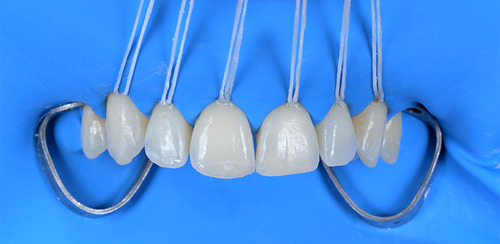
  • Cataloguer le matériel nécessaire pour la mise en place simplifiée du champ opératoire Appliquer les process cliniques afin de gagner en temps et en précision dans la mise en place du champ opératoire Savoir analyser une dent pour la reproduire en termes de forme, de couleur et d’état de surface Réaliser un relevé de couleur précis Choisir son adhésif et comprendre sa manipulation clinique Décrire et comprendre les bases cliniques de la stratification naturelle antérieure et du polissage Réaliser la forme idéale de préparation vestibulaire pour une stratification d’un angle antérieur Maîtriser et appliquer la stratification esthétique simple des composites pour un résultat esthétique et fonctionnel reproductible Savoir combler un diastème ou un triangle noir avec un composite de façon simple et efficace Maîtriser la méthode de moulage par injection avec les résines fluides Maîtriser l’ensemble des étapes du protocole : de la planification au wax-up, en passant par la fabrication des clés en silicone transparent et l’injection du composite Savoir comment finir et polir les restaurations pour un résultat durable.
    • Lyon, France
    • 8 Avenue Maréchal Foch
      France
    Dec
    03

    2026

    Digues & Composites antérieurs

    Lyon, France
    DCO France
    https://schema.org/OfflineEventAttendanceMode
    https://schema.org/EventScheduled
    France
  • Biology Meets Innovation in Implant Prosthodontics The secret to a successful implant-supported prosthesis lies in achieving complete integration of the restoration at all levels. Implant restorations involve a series of interfaces that must be optimized to ensure long-term success. These include: the prosthetic interface, the aesthetic interface, the soft tissue interface, and the bone interface. All of these parameters are closely interconnected, and through careful selection of both surgical and restorative protocols, it is possible to optimize their integration. In this regard, a solid understanding of the biological principles surrounding dental implants is essential for making appropriate therapeutic decisions. This evaluation becomes crucial in the treatment of aesthetic areas. In fact, the perfect aesthetic integration of the implant-supported restoration depends on key factors: the diagnosis and prosthetic planning; the evaluation of the bone compartment and its management using the most appropriate surgical techniques; the evaluation and management of the supracrestal compartment; the choice of the restorative material. The role of the supracrestal compartment has gained a crucial role in recent years in implant therapy. In managing aesthetic areas, the role of the supracrestal compartment is fundamental for optimizing natural soft tissue integration and avoiding soft tissue defects. During the course, this aspect will be addressed from a surgical and prosthetic point of view, to allow for the safest possible approach to implant therapy in aesthetic zones. Keywords: RESTORATIVE ROOM – BIOLOGICAL INTEGRATION – SOFT TISSUE MANAGEMENT – SUPRACRESTAL COMPLEX – ESTHETIC INTEGRATION
    • Lyon, France
    • 12 Quai du Général Sarrail
      France
    Feb
    04

    2027

    Masterclass Dr Giacomo Fabbri

    Lyon, France
    DCO France